

Hearing Wrap Up: SNAP Integrity is Undermined by Waste, Fraud, and Abuse
WASHINGTON—Today, the Subcommittee on Delivering on Government Efficiency held a hearing on “Combating Waste, Fraud, and Abuse in SNAP.” During the hearing, members examined the root causes of waste, fraud, and abuse within Supplemental Nutrition Assistance Program (SNAP). The hearing also explored reforms and oversight measures that would strengthen SNAP program integrity, safeguard taxpayer dollars, and ensure benefits are directed to eligible recipients.
Key Takeaways:
The Government Accountability Office has repeatedly identified weaknesses in SNAP administration that leave the food assistance program vulnerable to fraud, improper payments, and eligibility errors.
- U.S. Department of Agriculture Inspector General John Walk testified that, “Criminals use skimming technology to capture information such as the card number and pin code. The data captured is then used to clone the victim’s EBT card. Criminals will then cash out at the opportune time. The legitimate recipient is left without food assistance… Today, there are more than 250,000 food retail stores authorized to exchange food for snap benefits. They then obtain federal reimbursement for the food they sell. You can think of them as the providers in this program. Unscrupulous retailers will instead use their stores to launder snap benefits. An individual will exchange their card for cash, and the retailer will extract the remaining value from the card or sell it.”
- Dawn Royal, Director of the United Council on Welfare Fraud, testified that “One of my colleagues recently brought a case to our attention that illustrates several of the ongoing problems in SNAP. One address, a one-bedroom efficiency had 27 SNAP and 12 Medicaid beneficiaries. Logic would suggest it’s impossible for all of those beneficiaries to live in a one-bedroom apartment, but it is this. This is the program we have fostered. These are the types of circumstances that we’re dealing with. Or take another case that is a remnant of the COVID era, long after the end of the public health emergency. There is nothing an investigator based on current federal policy can do to prevent a SNAP beneficiary from using their EBT benefits to have eligible items delivered to someone else in another state. So a recipient with an EBT card issued from Nebraska can order a case of Red Bull on Walmart, Amazon, DoorDash, or Uber Eats and have it delivered to or picked up by someone in Kentucky. This was permitted during the pandemic, but it’s one of the few COVID-era policies that has not been rescinded, and its fraud benefits delivery should be restricted to the beneficiaries’ address of record. It’s one of the few safeguards the program has, and convenience of this sort only encourages fraudulent behavior.”
- Rachel Greszler, Senior Research Fellow at Advancing American Freedom, testified that “Today, we’re talking about the SNAP program, which has exploded over the past 15 years. This growth can’t be explained solely based on need. The poverty rate has declined since 2008, and yet the percentage of people on snap benefits has increased over 50 percent. With the explosion in spending has come a fivefold increase in improper payments, a 10.9 percent improper payment rate last year equal to $10.2 billion. The incentive problem is obvious the states decide what to spend, and the federal taxpayer foots the bill. It doesn’t matter whether a state has a three percent improper payment rate like South Dakota, or 25 percent like Alaska. The federal government pays it all…It’s important to note that much of the outright fraud that occurs, such as that that’s been discussed by Inspector Walk and Ms. Royal, often isn’t counted in the improper payments because it happens after the benefits are delivered.”
Americans expect SNAP to be managed with transparency, accuracy, and safeguards that protect against waste, fraud, and abuse.
- Ms. Royal also testified that “Unfortunately, too many of the safeguards of our nation’s SNAP program have been weakened, delayed or inconsistently implemented. The result is predictable benefits have been exploited, and public confidence has eroded.”
The House Oversight Committee will examine meaningful reforms that strengthen SNAP program integrity and protect taxpayer dollars.
- Inspector General Walk also stated that “Deterring fraud requires exacting real consequences on those who commit fraud. [Office of the Inspector General] will continue to investigate and make arrests and support convictions. Although a strong law enforcement response is critical, we cannot pay and chase our way to stopping SNAP fraud. To be effective, we need to guard the front door by ensuring that proper internal controls at [U.S. Department of Agriculture] and state administering agencies are in place to prevent fraud, adopting modern technology to verify identity and other applicant information before making payments is crucial. In addition to the ability to identify and prevent snap fraud. We would benefit tremendously from improved information sharing between the federal government and the states.”
- Ms. Royal further stated that “[CMS] must resolve the uncertainty, fragmenting SNAP and Medicaid cases due to its inaction. To enforce all of this, the Subcommittee, in coordination with authorizers and appropriators, should require written plans with named officials, measurable milestones, public reporting, and consequences for missed deadlines, program and integrity. Program integrity and compassion are not competing values. Strong oversight of SNAP program protects taxpayers and recipients.”
- Ms. Greszler urged Congress to “First, follow the money. The federal government should account for the money it spends as carefully as it accounts for the dollars it collects. We can’t reduce fraud if we can’t follow the money. Second, close eligibility loopholes. Congress should end legal abuse of federal welfare programs by eliminating broad based categorical eligibility, which allows individuals to automatically qualify for benefits based on something as trivial as receiving a brochure. The Department of Agriculture estimated that this loophole allowed 5.6 million individuals who were not eligible under federal standards to nonetheless receive SNAP benefits.”
Member Highlights:
Subcommittee Chairman Burchett (R-Tenn.) asked about the importance of acquiring SNAP data from the 21 states that have not complied with USDA’s request for it in order to identify and prevent fraud.
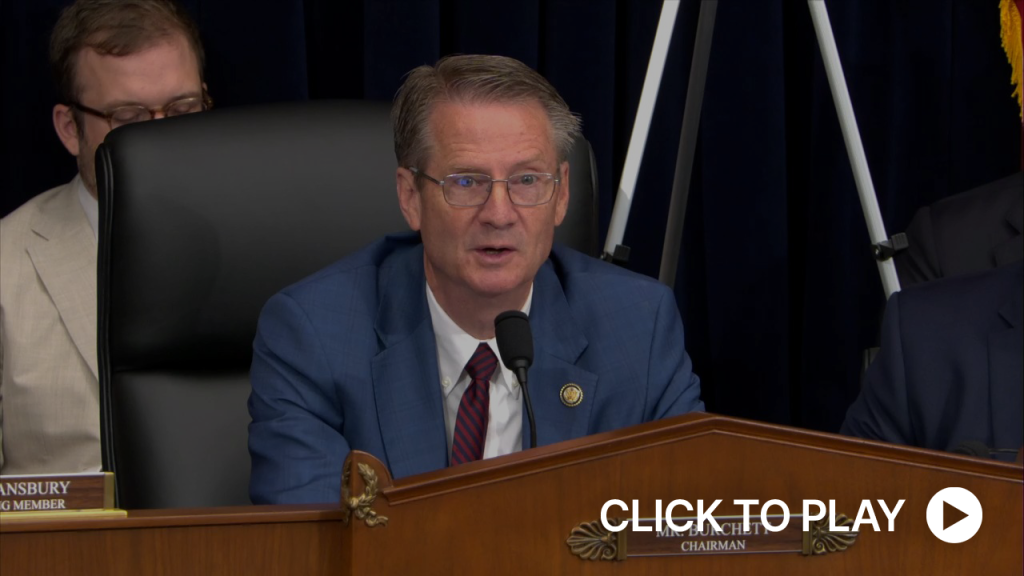
Subcommittee Chairman Burchett: “According to nonpartisan anti-fraud experts, improved data sharing is needed to better identify and prevent fraud in federal benefit programs, especially those administered by the states. But 21 states have for the past year refused to provide food stamp data for the Department of Agriculture. The Agriculture Department identified $3 billion in potential fraud just from the food stamp data submitted by 29 states. That includes benefits going to 186,000 deceased individuals in the 442,000 beneficiaries with fake Social Security numbers. Based on these results, is it fair to assume the Trump Administration could identify additional fraud if it had the data from 21 noncompliant states?”
Ms. Greszler: “Yes, it is absolutely fair to assume that you could catch significantly more fraud if you take 50 different siloed databases and compile them together. And just one example of that is that the same Social Security number could be used to claim food stamps in 50 states, plus the District of Columbia. And none of those states will know that because they don’t have access to the other one.”
Subcommittee Chairman Burchett: “There’s no cohesive force between the two. There’s no, as we found with the IRS and a lot of our agencies, the computers just don’t hook up. Is that what you’re telling me?”
Ms. Greszler: “Yes. They’re not looking across them. And essentially, the federal government is granting a blank check to the states to apply these programs. And yet they’re not returning the data, per the recent request, to be able to ensure the integrity of those dollars.”
Subcommittee Chairman Burchett: “Right, thank you. Ms. Royal?”
Ms. Royal: “Ms. Greszler did an excellent job of answering that question. Of course, more data is going to be able for us to identify more fraud. The trouble right now [is], states don’t have access to information. If a recipient or applicant is already receiving benefits in another state, there is a question on the application that requires the applicant to provide that information. You know, have you received benefits in another state? If so, which one? If they mark no to that, then as an investigator, there’s no way for me to contact another state to verify that. So having access to the data, making sure that benefits aren’t already being issued by another state and preventing dual issuance would be a significant savings to the taxpayer.”
Rep. Brandon Gill (R-Texas) pressed the Democrats’ witness, Ms. Gina Plata-Nino, the Director of SNAP Policy and Advocacy at the Food Research and Action Center, if her organization is funded by companies that profit from SNAP.
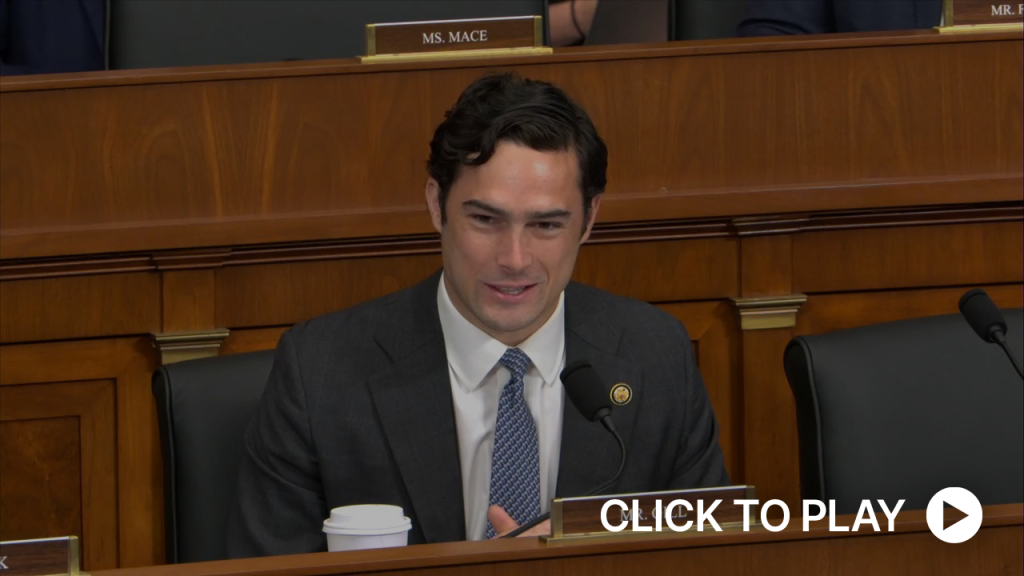
Rep. Gill: “Are you that ideologically dug in that you want our tax dollars paying for sugary sodas that you will not, in a straightforward way, admit that sugary sodas are not healthful for the American people?”
Ms. Plata-Nino: “I think that focusing on soda, when people are going hungry is—”
Rep. Gill: “We spend a lot of our tax dollars are spent on soda. That’s why I’m asking about it. We have. And you appear to be so ideologically dug in that you won’t answer a simple question that that’s not an appropriate use of our tax dollars, and that that does not, in fact, make the American people more healthy.”
Ms. Plata-Nino: “I won’t answer because there’s no data sort of proving that.”
Rep. Gill: “Do you need data to determine whether drinking soda is healthy? I’m sorry, this is a serious question. Do you believe that perhaps drinking sodas every day is healthy?”
Ms. Plata-Nino: “The worst health outcome is hunger, when the individuals don’t have the resources.”
Rep. Gill: “…To satiate hunger with Coca-Cola?”
Ms. Plata-Nino: “I did not say that.”
Rep. Gill: “But you said that the worst health outcome is hunger. And I’m asking you about sugary sodas.”
Ms. Plata-Nino: “And I’m focusing on the nutrition needs and making sure that children have the resources.”
Rep. Gill: “Is your organization funded by soft drink makers?”
Ms. Plata-Nino: “I am not in charge of development, but no.”
Rep. Gill: “It’s not? Okay. Is your is your organization funded by organizations that make money from food stamps? Do organizations who profit off of food stamps fund your organization or businesses?”
Ms. Plata-Nino: “I mean, in the, in the, I, I can’t comment to that. Happy to talk about the resources that are needed.”
[…]
Ms. Plata-Nino: “Retailers are the major beneficiaries [of SNAP benefits].”
Rep. Gill: “Do you think that that’s a conflict of interest?”
Ms. Plata-Nino: “That’s where EBT dollars are utilized.”
Rep. Gill: “Yes. And they’re profiting off of your advocacy. Do you think that that’s a conflict of interest? I think most people think that’s a conflict of interest. I know you don’t want to answer.”
Rep. Brian Jack (R-Ga.) inquired about the abuse of SNAP benefits to fund luxury vehicles and other goods, instead of nutritional assistance.
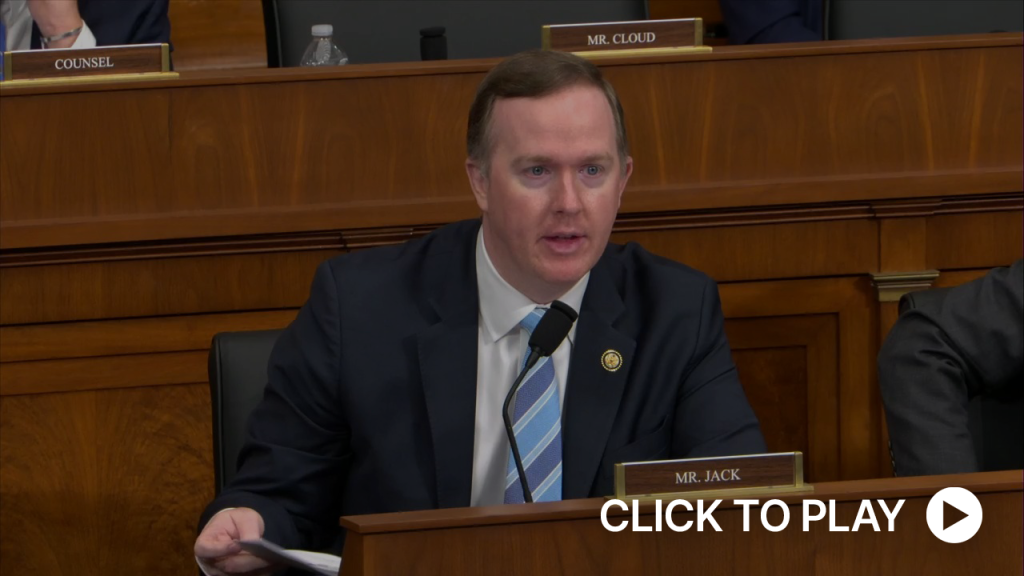
Rep. Jack: “I want to commend [United Council on Welfare Fraud] for publishing this report, ‘Why Food Stamp Program Integrity is More Important Now than Ever.’ And specifically, I just want to note from the report, in 2023 alone, food stamp enrollees in one state owned more than 14,000 luxury vehicles. And among those, you had three Ferraris, 11 Lamborghinis, 59 Maseratis, and thousands of other luxury vehicles. The supposed goal of the SNAP program, of course, has been litigated today, but what was revealed in this report seems to be the program’s reality. Help this Committee and the constituents back home understand, how does a program dedicated to feeding low-income families end up subsidizing Lamborghinis and Bentleys?”
Ms. Royal: “People make false statements on applications, and there is very little access to technology for states to verify that information before benefits are issued. So, it’s the Pay and Chase model, where even though a benefits worker may think that information is suspicious or suspect, they still have to issue those benefits, get it to a fraud investigator, fraud investigator puts it on the stack of already overwhelming caseload, and then has to go back and verify the facts. It’s not having access to technology and trying to fight these increased fraud numbers with a minimum amount of security of investigators is a herculean task that we can’t accomplish.”
Click here to watch the hearing.
Legal Disclaimer:
EIN Presswire provides this news content "as is" without warranty of any kind. We do not accept any responsibility or liability for the accuracy, content, images, videos, licenses, completeness, legality, or reliability of the information contained in this article. If you have any complaints or copyright issues related to this article, kindly contact the author above.
